Jan 29

Stand by for news!

We are still in that inter-car-show period, so things are kind of slow, but there are a few things to talk about, so let’s get right to it.

Mazda is recalling 52000 Tributes because brake fluid is leaking and causing fires. The real story here is that Mazda apparently sold at least 52000 Tributes.

Mini has announced that the upcoming roadster will be priced just over 23k. Not bad.

Hyundai sold 186k Elantras last year and would like to sell even more this year, but, because they can’t keep up with production, they won’t. What bizzaro world is this, where the Elantra is in such demand, that they can’t build them fast enough?

The Honda Crosstour 4 banger is going to have a base price of more than 27k. It’s basically the ugliest car currently produced, and it’s also more proof that cars are overpriced today. Maybe a drive of the Crosstour will change my mind, but man it’s ugly. Honda definitely thought the Crosstour would sell better than it has, but I have a feeling consumers just aren’t interested in an ugly, basically 30k dollar car. The new four cylinder makes 196hp, which is quite a bit less than the already available 276hp V6, which is $2500 more.

Ford had their best year, profit-wise, since the late 90s. Congrats!

This year’s Daytona 24 wrapped up this morning and it was a classic. Some really great racing right up to the end. The overall winner was the #60 Michael Shank Racing team piloted by Almandinger, Negri, Wilson, and Pew.

The #44 Magnus Racing Porsche took home the GT class title. The team of Andy Lally, John Potter, Richard Lietz and Rene Rast brought the Porsche around for the win.
Jan 29

Behind the scenes of a C63 Photoshoot.

Mercedes AMG vision put up a video of a hot car, a hot girl, and a hot bike. It is pretty much a must that I pass it along to you guys.

Jan 28

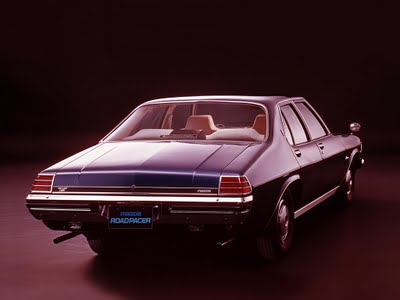
History : Mazda Roadpacer

Back in 1975, the car that most typified Australiana, it could be argued, was the HJ Holden. It was a large, heavy 4 door sedan powered by torquey, Holden “red” straight sixes and V8s.

It was also a car that pre-dated Holden’s introduction of “Radial Tuned Suspension”, and as such, was pretty much a wallowy barge to drive around in.

About this same time, in Japan,Toyota was selling the Century, Mitsubishi the Debonair, and Nissan the President. All large, luxury based cars that headed their respective company’s fleets.

Mazda had no competitor for the likes of these 4 door luxury sedans, despite having made great success in the 2 door luxury market with their Cosmo RE LTD. A situation they were hoping to fix.

Meanwhile, General Motors in the USA desperately wanted information about how exactly Mazda’s rotary worked(this was while they were working on the quad rotor Corvette).

So a deal was struck where Mazda would trade said information for a heap of cars from GM. A big part of this exchange involved family-sized bodyshells, in the form of the HJ Holdens, making their way to Japan.

Due to Japanese taxes based on engine capacity at the time, the torquey Holden engines were flung out, and in their place, went 13B Rotaries.

The result is one of the worst tragedies to befall car history.

Read the rest of this entry »

Jan 28

The Successful Racer’s Mindset

Any motorhead can think of a multitude of dominant racing programs. To Force, Penske, Hendrick, or Ferrari, these are the programs that not just set the bar, but move it up to the next notch. No matter the discipline or type of racing, it’s the mindset that is the same. And one idea remains, development never stops.

The idea for success is very simple, question every part. You first must come to understand every function of every part on the car. Once you have the full picture, then its time to ask the questions. Can this part be made with lighter materials? If the part broke, how can I make it stronger? How can I make it more get more airflow, more power, more mileage? Does the improvement outweigh the costs? Does it really need the modification?

Read the rest of this entry »

Jan 27

Spaceframes

In the beginning of car building, a simple body on a separate ladder chassis was all the rage. It is a cheap, simple and tough setup. Because of it’s strength and durability, it is still used in a lot of heavy off-road vehicles and things like large trucks.

The downsides of a separate ladder chassis are heavy weight and a lack of torsional rigidity. They’re heavy and they’re prone to twisting while driving.

The next stage of car chassis history was the common usage of monocoque construction. Most cars these days are made in a single, unitary piece, with the entire bodyshell being used to bear the load of the car.

It’s a cheap way of constructing a car, just like the ladder chassis setup. However, it’s much lighter and more rigid per kilo. Manufacturing-wise, a monocoque is an easy fit with the sheet metal used to construct today’s cars as well.

It is from the adoption of the monocoque, that crumple zones became a talking point for safety, because a monocoque car will crumple more easily than a ladder-chassis setup. So manufacturers started to design ways to control where and how this crumpling occurs.

Read the rest of this entry »

Older posts «

» Newer posts